Network Audio

Ethernet Regenerator

A quieter, clock-referenced network boundary for the audio endpoint.

A network conditioning component that rebuilds the final Ethernet link before the streamer or audio server, using careful layout, quiet local power, isolation, and a precision telecom-grade timing reference.

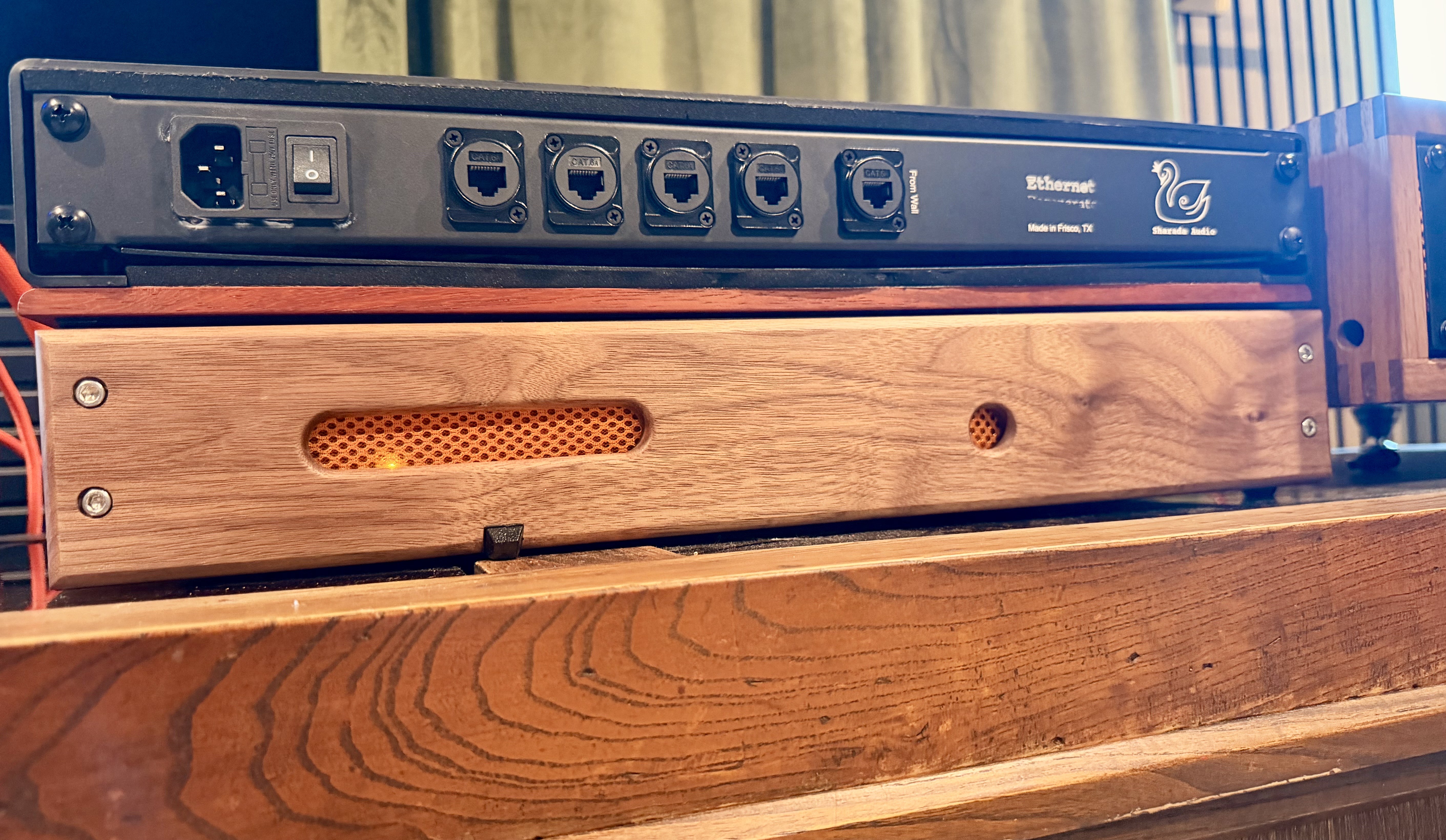
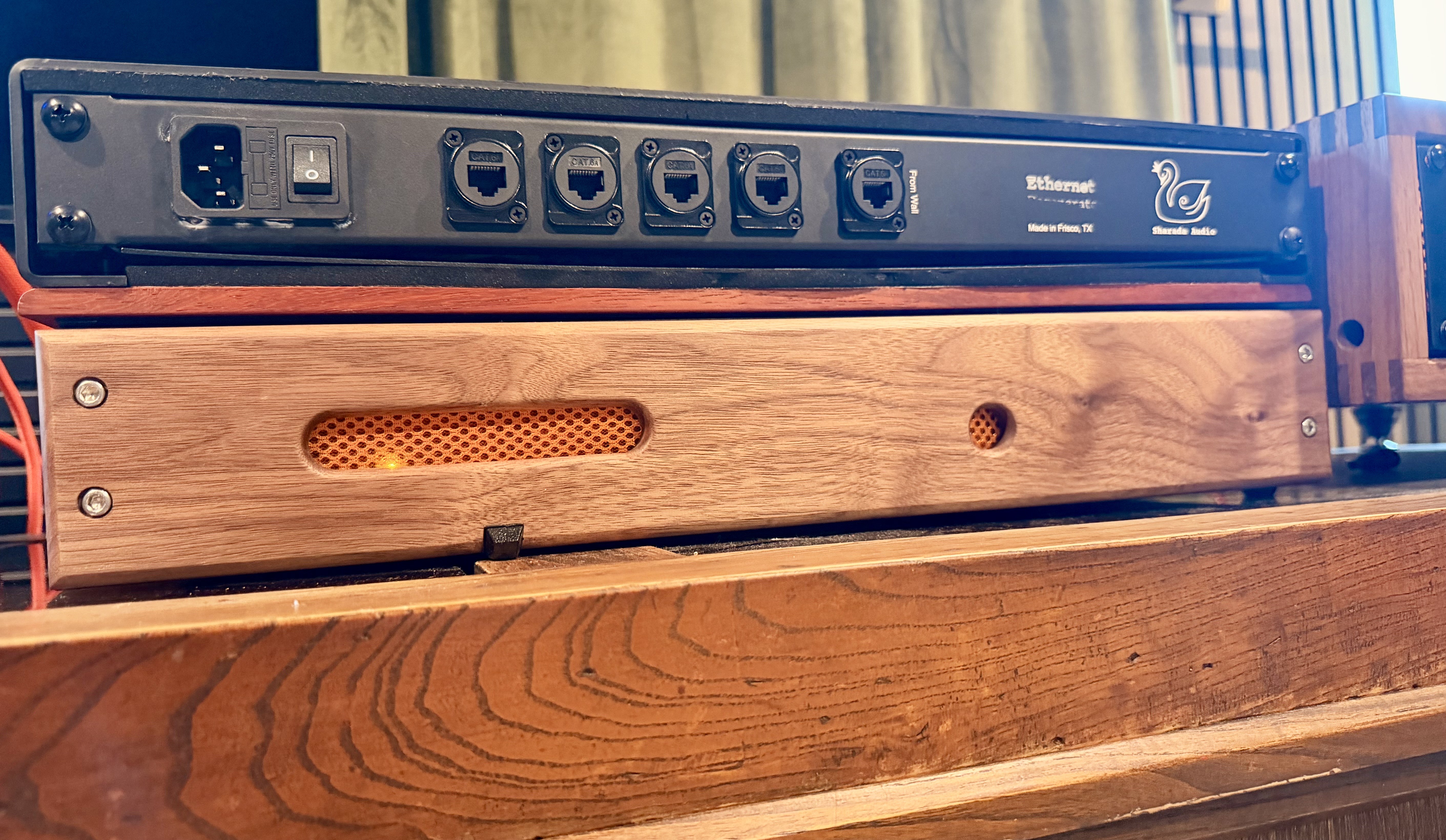
Ethernet Regenerator hero view
What it does

Clean up the network edge feeding audio

The Ethernet Regenerator is built for systems where ordinary routers, switches, and long cable runs are too electrically busy for the audio rack. It creates a controlled final Ethernet boundary before the streamer or server, so the endpoint sees a shorter, quieter, locally powered handoff rather than the full electrical behavior of the home network.

What it is not

It does not rewrite the music data

Ethernet audio is still packet data. The regenerator is not trying to change bits or apply a sonic effect. Its job is to rebuild the final network boundary: isolate the endpoint from upstream electrical noise, provide a cleaner local clocking environment for the network stage, and keep the last Ethernet segment physically close to the audio system.

Clock discipline

Telecom-grade timing belongs at busy digital boundaries

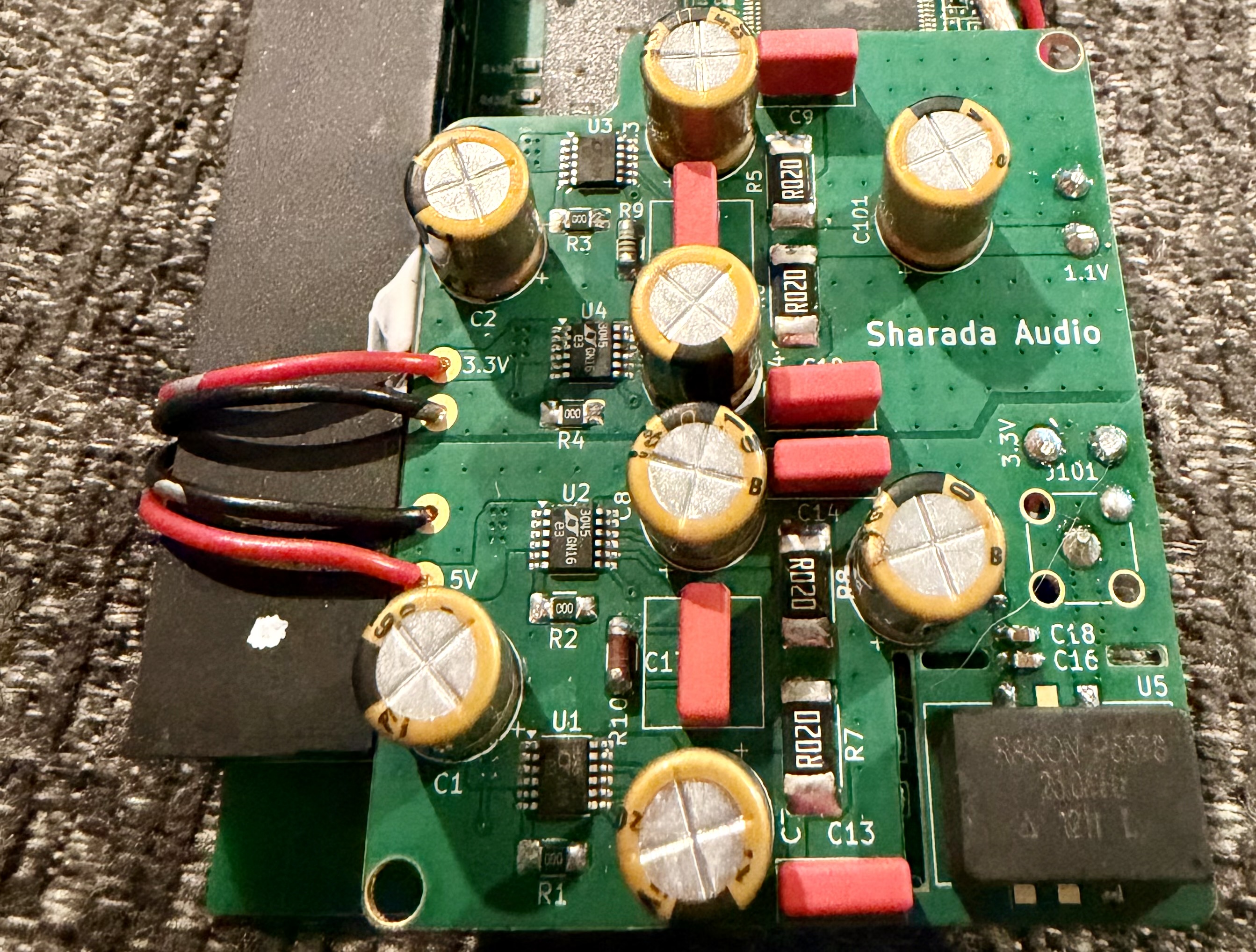
For the timing reference, we work with vendors who build oscillators for demanding telecom, edge, and infrastructure systems, where stability, phase-noise behavior, ageing, warm-up, and power behavior are part of the design. That matters in audio because the network link sits next to the streamer, its processor, its Ethernet PHY, its power rails, and the rest of the digital source environment.

Features

Built around the signal path

Final network boundary

Places a controlled Ethernet stage immediately before the streamer or audio server.

Precision timing reference

Uses a high-stability clocking approach selected for low phase-noise behavior and stable operation over temperature.

Low-noise local power

The regenerator is powered so it does not become another electrically busy box in the rack.

Short final run

The last Ethernet segment is treated as the audio-facing network link.

Electrical isolation

Reduces the amount of upstream router, switch, and cable behavior that reaches the audio endpoint.

Layout discipline

Network, timing, and power sections are physically organized for predictable audio-rack behavior.

Tech specs

Core specifications

Network path

5 specs
SpecValueSystem relevance
InputEthernetReceives the existing network feed from router, switch, or wall connection.
OutputEthernetThe output side is the audio-facing Ethernet handoff.
Chain fitFinal Ethernet boundary for streamer or audio serverThe regenerator is placed at the audio-facing network boundary.
Music dataPacket data remains unchangedThe goal is not data manipulation; it is a cleaner electrical and timing environment for the endpoint.
PlacementNear the streamer or audio serverA short final Ethernet run keeps the controlled side of the handoff close to the component that plays the music.

Clock and timing

6 specs
SpecValueSystem relevance
Clock classTelecom-grade precision oscillatorThe timing reference is selected from the class of parts used in demanding network and timing infrastructure, not commodity clocking.
Frequency stability10 ppb peak-to-peak class over a 20 C windowStable clock behavior helps keep the regenerated network stage consistent as temperature changes inside a real rack.
Long-term ageing<1 ppb/day classLow ageing helps the timing reference remain consistent over long listening periods and long product life.
Phase-noise floorAs low as -160 dBc/Hz classLow phase-noise behavior is one reason precision timing vendors matter at high-speed digital boundaries.
Warm-up behaviorFast warm-up to tight frequency windowThe timing reference should settle quickly enough for normal listening use instead of behaving like a lab instrument.
Output behaviorClock output selected for the local network stageThe clock is used inside the regenerator's local timing environment rather than exposed as a user-facing master clock.

Build approach

4 specs
SpecValueSystem relevance
Power focusLow-noise local supply pathPrevents the network accessory from adding avoidable supply noise near the audio endpoint.
Power behaviorEfficient precision timing stageModern high-grade oscillators can deliver tight timing behavior without the power burden of older large timing modules.
System roleNetwork boundary conditionerThis product focuses on network noise behavior rather than player or DAC duties.
Build statusCustom configurationEnclosure, power, clocking, and placement choices are matched to the network layout.
System fit

Fit and voicing

RoleA support component for network audio systems where the streamer is sensitive to upstream network conditions.
System matchNetwork streamers, audio servers, and Ethernet-fed endpoints.
What to listen forA quieter background, less edge on dense recordings, and more stable spatial focus in systems sensitive to network noise.
Best placementClose to the streamer or audio server, with a short final Ethernet cable.
Chain fitFinal Ethernet boundary for the streamer or audio server.