
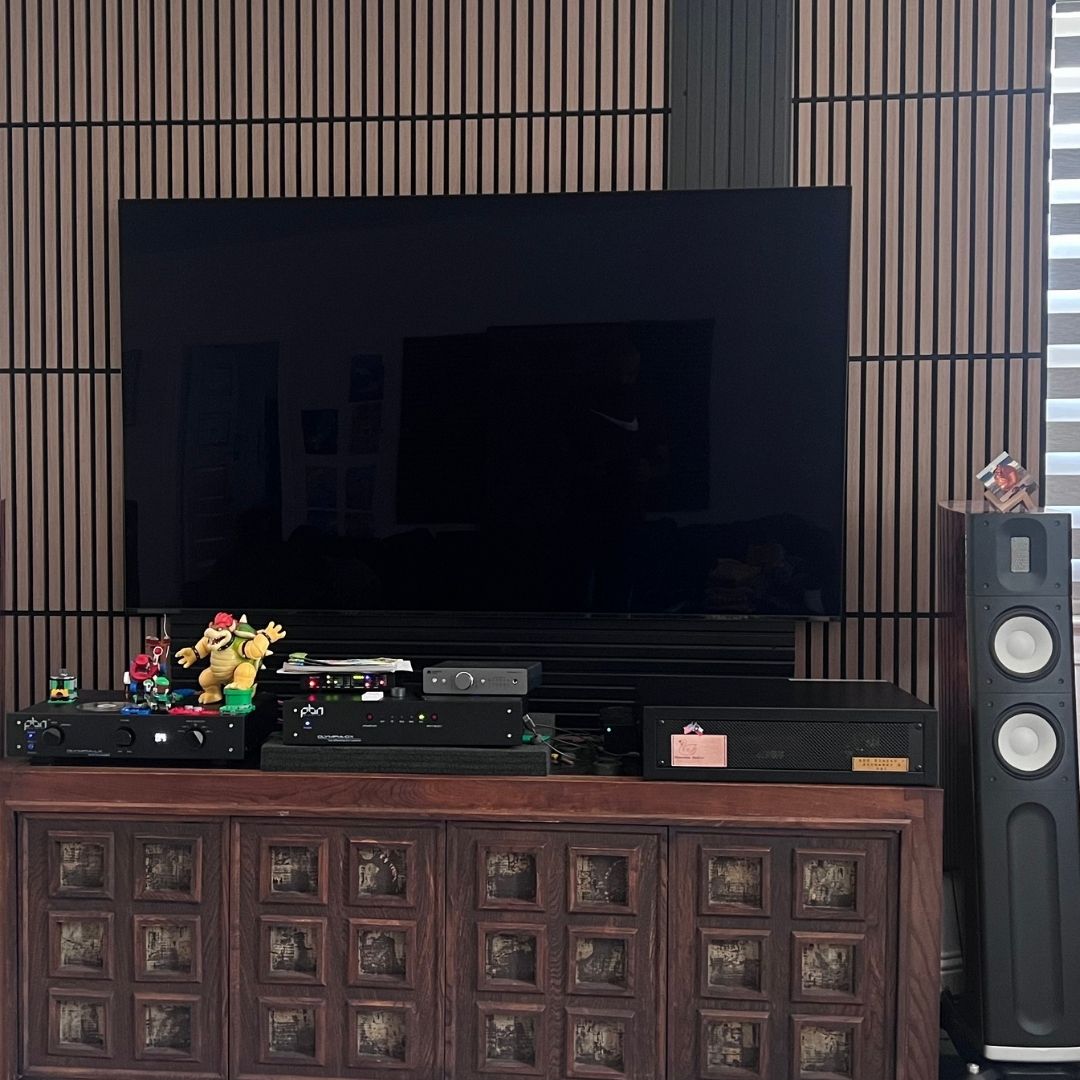
USB Streamer – Overview:
A unique Streamer + USB Transport to get pure USB based signal for your DAC. Ultra precision DC power supplies to dedicatedly power USB isolation/ Reclocking and a dedicated rail to power the streaming logic circuit. Supports music streaming via iOS, Android and Windows devices.
Our USB Streamer provides an excellent low-noise USB output for a high-fidelity DAC by combining carefully regulated, separated power supplies with well-designed core logic circuit architecture and components. Each aspect of our system—from power regulation, on board data memory (for buffering) management , and logic board grounding layout —contributes directly to superior audio signal integrity and minimal interference.
Fundamentals of our USB Streamer Design
Ultra clean power supplies
- We ensure an exceptionally clean power rail for both the main streaming board and USB isolation transformer circuits. Stable, low-noise supplies are fundamental to reducing injected noise on USB 5V rails and data lines, which feed directly into the USB output and, ultimately, the DAC.
Board layout and dedicated Paths
- Our core logic board takes advantage of dedicated electrical traces for data memory, USB, and other critical subsystems, minimizing cross-talk and ground loops between storage, network, and USB interfaces. High-speed traces for USB 3.2 are routed with controlled impedance, shielded with ground pours, and typically isolated from noisy power domains, further helping maintain signal integrity for the USB output. The use of independent power rails on critical connectors (e.g., memory, USB etc.) breaks up power distribution, avoiding “dirty” power from leaking into sensitive digital paths.
Memory considerations for buffering
- Our memory circuit is an ultra low-powered device, further lowering EMI and internal electrical noise compared to higher power commercially available drives. We follow the general principle of minimal circuit density in a single module. Fewer active ICs means less switching noise, especially near USB controllers and audio paths.
Grounding quality
- All of our logic boards pay attention to ground layers and careful connector ground returns, essential for digital audio. Separation of digital and analog ground (especially at the front panel audio header and USB layout) reduces ground-induced jitter, a known issue for audiophile DAC input sections. Using a separate power supply for the isolation (USB, Ethernet) prevents network noise and ground potentials from entering the main system ground or USB ground reference.
System level noise reduction
- Passive cooling with proper airflow eliminates fan-induced pulse currents on the main streaming logic power line, reducing EMI coupling into USB circuitry. Our Music Process thread is created with a consideration for very low system overhead, meaning less processor-induced switching noise compared to heavier operating system configurations.
USB Streamer – Configurations & Price:
USB OCXO Re-clocker with dedicated PSU – Comes in either birchwood plywood case – $4,200.00. Solid Walnut Case + $300
Contact us if you have interest in our USB Streamer:
These devices are made to order. We require a deposit of 10% at the time of order and will ship when order is paid in full.


Level 1 USB Streamer – With Ethernet Isolation
- Galvanic Isolation: Out Ethernet isolator provides 1500 VRMS magnetic isolation between Ethernet ports. This breaks the direct electrical path between the main ethernet socket and the streaming logic board preventing ground loops. Ground loops can introduce circulating currents and noise (“mains hum”) due to small voltage differences between system grounds; eliminating the loop prevents low-frequency and wideband noise from polluting the sensitive audio sub-system.
- Common-Mode Noise Rejection: The internal Ethernet magnetics (transformers and chokes) filter high-frequency common-mode noise riding on Ethernet cables. These noise currents can be injected by electrically noisy computers, AC power supplies, or even from wireless EMI sources. Filtering at the network layer can significantly reduce digital noise coupling into the audio chain.
- Signal Integrity: By absorbing and filtering transient spikes and differential noise, the magnetic isolation maintains proper signal integrity in Ethernet transmissions, which is critical for bit-perfect streaming and stable playback with very low jitter.
Level 2 USB Streamer – Re-clocking with dedicated PSU
Adding a USB isolator/ re-clocker powered by its own dedicated, ultra-low noise power rail, will further improve the signal quality and noise isolation at the USB output feeding your DAC. This technique is widely used in high-end digital audio systems to achieve maximal noise immunity and sonic fidelity.
- Galvanic Isolation: Our isolation circuit physically and electrically separates the host (Streaming logic board) side from the DAC side, breaking any ground loops or direct DC continuity. This prevents ground currents or digital noise from the streamer from propagating to the sensitive DAC circuitry.
- Noise Suppression: Since noisy digital and power supply ground reference from the streaming logic cannot cross to the DAC, all high-frequency noise, switching noise, and common-mode interference from the entire upstream system (including the core streaming processor, VRMs, SSDs, and network chips) is blocked at the isolator boundary.
- Power Cleanliness on DAC Side: By providing a separate, tightly regulated power supply to the downstream (DAC-facing) side of the isolator and USB device, the DAC receives power that is entirely independent from the core streaming logic internal power and noise sources. This is critical, as USB DACs commonly take at least part of their power from the 5V USB rail.
- Signal Integrity/Jitter Reduction: We re-clock the USB data again with a clean, board-mounted oscillator. This minimizes jitter and restores a well-formed digital data edge, resulting in notably signal quality at the DAC input.
In short, our USB Streamer exemplifies best practices for minimizing digital noise at the USB output, ensuring that your DAC receives a clean, bit-perfect signal for optimal sound reproduction.